

BPC-157 vs TB-500: How the Two Most Popular Research Peptides Compare
November 28, 2026
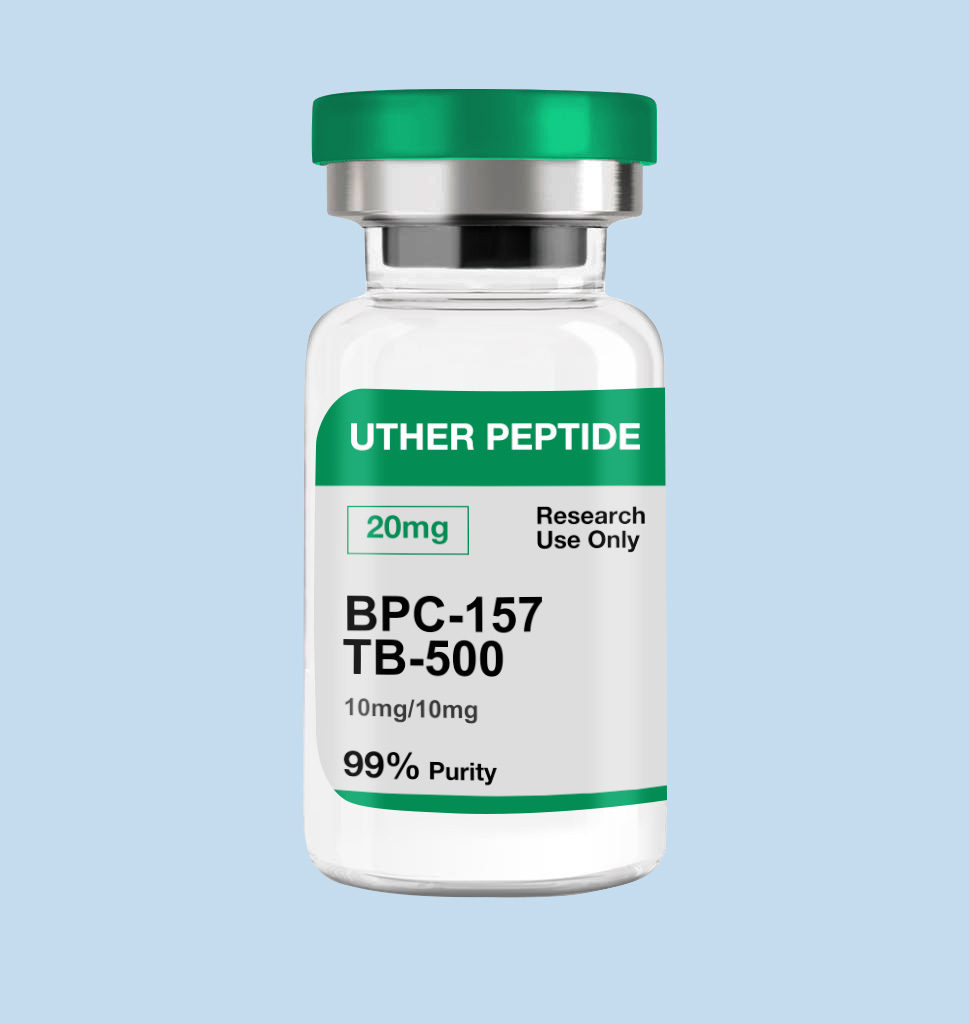
BPC-157 vs TB-500 is one of the most common comparisons in peptide research. BPC-157 and TB-500 are the two peptides researchers ask about most when they study tissue repair models, and they are often mentioned in the same breath. They are, however, very different molecules. This comparison explains how they differ, where they overlap, and why so many labs study them side by side.
Quick comparison
| BPC-157 | TB-500 | |
|---|---|---|
| Origin | Derived from a protective protein in gastric juice | Synthetic fragment based on thymosin beta-4 (Tβ4) |
| Size | 15 amino acids (~1,419 Da) | Short active-region peptide of Tβ4 (commonly the 17–23 “LKKTETQ” region) |
| Main research focus | Angiogenesis, nitric oxide signalling, GI and tendon models | Actin regulation, cell migration, wound and cardiac models |
| Stability | Notably stable, including in acidic conditions | Standard peptide stability; store lyophilized |
| Human approval | Not approved | Not approved |
What is BPC-157?
BPC-157 (Body Protection Compound 157) is a 15-amino-acid synthetic peptide. In rodent and cell models it has been studied for tendon, ligament, muscle and gastrointestinal healing. Additionally, researchers link its effects to VEGFR2-related angiogenesis, the nitric oxide system and FAK–paxillin cell-migration signalling. Read our full BPC-157 research guide.
What is TB-500?
TB-500 is a synthetic peptide modelled on the active region of thymosin beta-4, a naturally occurring 43-amino-acid protein found in almost every cell. Thymosin beta-4 is a major G-actin-sequestering protein. By binding actin monomers, it influences how cells build their cytoskeleton, move and migrate. Moreover, the “LKKTETQ” motif is thought to be central to these actin-binding and cell-migration effects, which is why TB-500 products are built around it. Learn more in our TB-500 research overview.
How their mechanisms differ
- BPC-157 appears to work largely through signalling: growth-factor receptor expression, blood-vessel formation and nitric oxide pathways.
- TB-500 appears to work largely through structure and motility: actin dynamics that let cells such as keratinocytes, endothelial cells and fibroblasts migrate into a wound area.
Because the two act on different steps of the repair process, researchers have hypothesized that combining them may produce complementary effects in experimental models. That hypothesis has driven the popularity of pre-mixed BPC-157 + TB-500 research blends.
Shop research-grade BPC-157 vs TB-500 at Uther Peptide
- BPC-157 10mg ($65)
- TB-500 10mg ($130)
- BPC-157 5mg + TB-500 5mg ($90)
- BPC-157 10mg + TB-500 10mg ($130)
- BPC-157 30mg + TB-500 30mg ($310)
Every batch ships with a third-party certificate of analysis (COA). Free US shipping on orders over $500.
Research models where each is used
BPC-157
Achilles tendon transection, ligament injury, muscle crush, gastric ulcer, intestinal anastomosis and vascular occlusion models, mostly in rats.
TB-500 / thymosin beta-4
Dermal wound closure, corneal injury, hair-follicle and cardiac injury models. Researchers have also examined thymosin beta-4 itself in early clinical research for eye and wound applications. Note that those studies used full-length Tβ4, not short TB-500 fragments.
Single peptides or a blend?
For studies that need to isolate one mechanism, single-peptide vials give the cleanest experimental design. For studies examining combined effects, a pre-measured blend removes weighing errors and saves time. Uther Peptide offers both: BPC-157 and TB-500 as single vials, plus three blend sizes (5+5mg, 10+10mg and 30+30mg).
Storage and handling
Both peptides ship as lyophilized powder. Store them at −20 °C, reconstitute aseptically and refrigerate the solution at 2–8 °C. Read our peptide storage and reconstitution guide for step-by-step instructions.
For background reading, see the BPC-157 literature and thymosin beta-4 literature on PubMed.
Frequently asked questions
Is BPC-157 or TB-500 better?
Neither is “better”. In addition, they are studied for different mechanisms: BPC-157 for signalling and angiogenesis, TB-500 for actin-driven cell migration. Furthermore, the right choice depends on the research question.
Can BPC-157 and TB-500 be studied together?
Yes. Also, many preclinical designs study them in combination, and Uther Peptide offers pre-mixed BPC-157 + TB-500 research blends in three sizes.
Is TB-500 the same as thymosin beta-4?
No. Thymosin beta-4 is a 43-amino-acid protein. TB-500 is a shorter synthetic peptide based on its active actin-binding region.
Are these peptides approved for human use?
No. In fact, both are research compounds only, and we sell them strictly for laboratory use.
Research use only. Uther Peptide sells all products strictly for in-vitro laboratory research, not for human or veterinary use, diagnosis, treatment or prevention of any disease. Nothing in this article is medical advice. The research summarized here is preclinical or early-stage unless stated otherwise.